Inviting, Accepting and Refusing in English: Useful Expressions and Examples
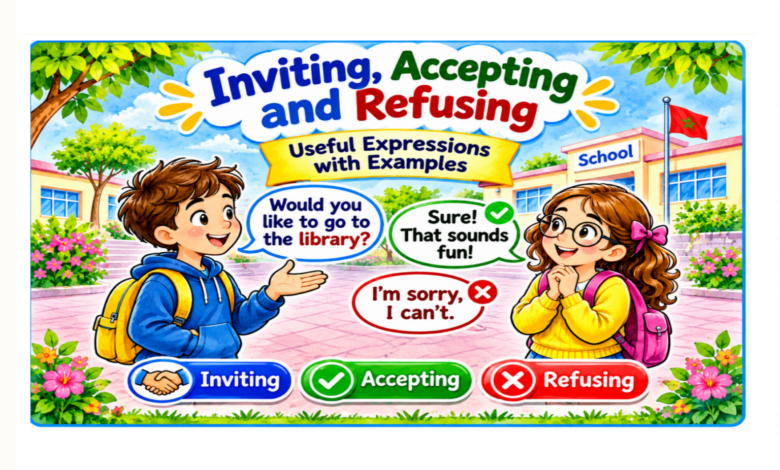
Learning how to invite someone, accept an invitation, or politely refuse an invitation is an important part of everyday English communication. Whether you want to invite a friend to play football, go to the cinema, visit the library, or spend time together, knowing the right expressions will help you communicate naturally and confidently.
In this English grammar and communication lesson, you will learn useful expressions for inviting, accepting and refusing invitations, with easy examples and a practical dialogue to help you improve your speaking skills.
1. How to Make an Invitation in English
An invitation is when you ask someone to do something with you. You can invite a friend to participate in an activity, visit a place, or spend some time together.
Here are some common expressions you can use to invite someone:
- Would you like to…?
- Do you want to…?
- Let’s…!
- How about + verb-ing…?
- Why don’t we + verb…?
Examples of Inviting Someone
- Would you like to play football with me?
- Do you want to go to the cinema?
- Let’s go to the park!
- How about playing basketball after school?
- Why don’t we visit the library?
These expressions are useful when talking to friends, classmates, and family members.
2. How to Accept an Invitation in English
When someone invites you and you want to say yes, you can use polite and friendly expressions to accept the invitation.
Here are some common expressions for accepting invitations:
- Sure!
- Yes, I’d love to!
- That sounds fun!
- Great idea!
- Sounds great!
- Of course!
Examples of Accepting an Invitation
Example 1:
- Ali: Would you like to play football?
- Omar: Sure! That sounds fun!
Example 2:
- Sara: Let’s go to the library after school.
- Lina: Yes, I’d love to!
Example 3:
- Adam: How about watching a movie tonight?
- Youssef: Great idea!
Remember: When you accept an invitation, try to sound friendly and enthusiastic.
3. How to Refuse an Invitation Politely in English
Sometimes, you cannot accept an invitation because you are busy or have other plans. In this situation, it is important to refuse politely and respectfully.
Here are some useful expressions for refusing invitations:
- I’m sorry, I can’t.
- No, thanks.
- I can’t, but maybe another time.
- Sorry, I’m busy.
- Thanks for inviting me, but I can’t.
Examples of Refusing an Invitation
Example 1:
- Yassine: Would you like to play basketball?
- Salma: I’m sorry, I can’t.
Example 2:
- Adam: Do you want to go to the cinema?
- Lina: I can’t, but maybe another time.
Example 3:
- Omar: Let’s go to the park!
- Ali: No, thanks. I’m busy today.
Remember: You can refuse an invitation without being rude. A polite expression helps you show respect for the person inviting you.
4. Inviting, Accepting and Refusing: A Practical Dialogue
Read the following dialogue between Yassine and Salma. Pay attention to how they invite each other and respond to invitations.
Yassine: Hi, Salma! How are you?
Salma: I’m great, thanks! And you?
Yassine: I’m good too. Do you want to hang out after school?
Salma: Sure! That sounds fun!
Yassine: Let’s go to the library to read some new books together.
Salma: Sounds great! See you after school!
Understanding the Dialogue
- Invitation: “Do you want to hang out after school?”
- Accepting: “Sure! That sounds fun!”
- Another invitation: “Let’s go to the library to read some new books together.”
- Accepting: “Sounds great!”
This dialogue shows how to use invitations and positive responses in a natural conversation.
5. Quick Summary: Useful English Expressions
| Inviting | Accepting | Refusing |
|---|---|---|
| Let’s play soccer! | Sure! | I’m sorry, I can’t. |
| Would you like to read a book? | Yes, I’d love to! | I can’t, but maybe another time. |
| How about going to the park? | That sounds fun! | No, thanks. |
| Why don’t we go to the cinema? | Great idea! | Sorry, I’m busy. |
| Do you want to play basketball? | Of course! | Thanks, but I can’t. |
6. Why Is It Important to Learn These Expressions?
Learning how to invite, accept and refuse politely helps you:
- Communicate more confidently in English.
- Make friends and build positive relationships.
- Participate in everyday conversations.
- Express your opinions and preferences politely.
- Improve your speaking and communication skills.
The best way to master these expressions is to practise using them in different situations with your classmates, friends, and family.
🎯 Test Your Knowledge: Start the Quiz!
Now that you have learned the most useful expressions for inviting, accepting and refusing invitations, it’s time to check your understanding!
Can you recognize an invitation? Do you know how to accept an invitation politely? Can you identify the correct expressions for refusing an invitation?
Don’t just read the lesson — put your knowledge to the test!
👇 Click the START QUIZ button below to begin the quiz and see how well you understand inviting, accepting and refusing in English. Good luck!