Colors in English: Learn 20 Common Color Names with Examples
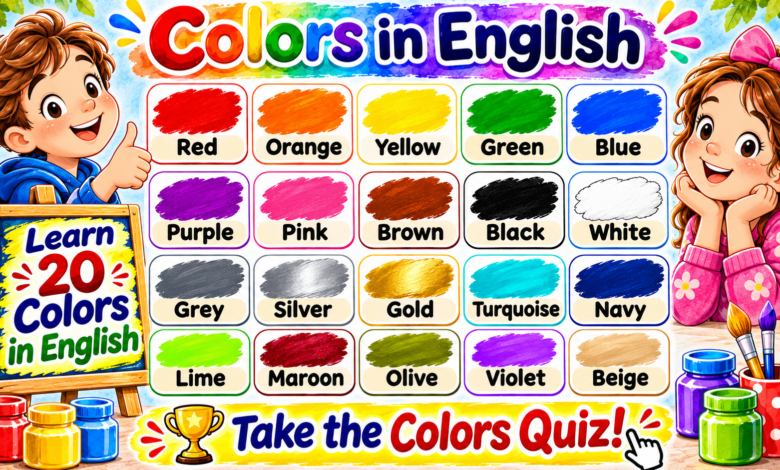
Colors are everywhere! We see them in nature, clothes, food, animals, and the objects around us. Learning the names of colors in English is an important part of building your vocabulary, especially for beginners and young English learners.
In this lesson, you will discover 20 common color names in English, learn how to describe everyday objects using colors, and understand the difference between similar shades.
At the end of the lesson, you can test your knowledge with our fun interactive Colors in English Quiz!
1. The Basic Colors in English
Red ❤️
Red is a bright and strong color.
- A strawberry is red.
- A rose can be red.
- The fire engine is red.
Blue 💙
Blue is the color we often associate with the sky and the sea.
- The sky is blue.
- My schoolbag is blue.
- The ocean looks blue.
Yellow 💛
Yellow is a bright color often associated with sunshine.
- The sun looks yellow.
- A ripe banana is yellow.
- The school bus is yellow.
Green 💚
Green is commonly found in nature.
- The grass is green.
- The leaves are green.
- My jacket is green.
Orange 🧡
Orange is a warm color between red and yellow.
- An orange is orange.
- The carrot is orange.
- The sunset can look orange.
Purple 💜
Purple is a color traditionally associated with a mixture of red and blue paint.
- The flower is purple.
- She has a purple dress.
- My pencil case is purple.
Pink 🩷
Pink is a lighter shade associated with red.
- Her dress is pink.
- The little flower is pink.
- The balloon is pink.
Brown 🤎
Brown is a natural color commonly found in wood, soil, and chocolate.
- The bear is brown.
- My shoes are brown.
- The table is brown.
Black 🖤
Black is a very dark color.
- My shoes are black.
- The cat is black.
- His hair is black.
White 🤍
White is a very light color.
- Snow is white.
- The paper is white.
- My T-shirt is white.
2. More Useful Colors and Shades
Grey 🩶
Grey is a neutral color between black and white.
- The elephant is grey.
- My school uniform is grey.
- The clouds look grey.
Note: Grey is the usual British English spelling, while gray is commonly used in American English.
Gold 💛
Gold is a warm, metallic yellow color.
- The ring is gold.
- She has a gold necklace.
- The trophy is gold.
Silver 🩶
Silver is a shiny, metallic grey color.
- The car is silver.
- He wears a silver watch.
- The spoon is silver.
Beige 🤎
Beige is a pale, light brown or cream color.
- The sofa is beige.
- My trousers are beige.
- The walls are beige.
Turquoise 🩵
Turquoise is a beautiful blue-green color.
- The water looks turquoise.
- She has a turquoise scarf.
- The necklace is turquoise.
Navy 💙
Navy is a very dark shade of blue.
- His suit is navy.
- My school uniform is navy.
- The navy-blue bag is beautiful.
Light Green 💚
Light green is a pale shade of green.
- The wall is light green.
- She has a light green dress.
- The little plant has light green leaves.
Lime 💚
Lime is a vivid, bright yellow-green shade.
- The lime-colored balloon is bright.
- She has a lime-green T-shirt.
- The lime-green paint is very vivid.
Maroon ❤️
Maroon is a deep, dark shade of red.
- His jacket is maroon.
- The curtains are maroon.
- She bought a maroon handbag.
Coral 🩷
Coral is a warm shade between pink and orange.
- Her dress is coral.
- The coral flowers are beautiful.
- I like coral-colored decorations.
Violet 💜
Violet is a shade of purple, often appearing lighter and more bluish or pinkish depending on the shade.
- The flower is violet.
- She painted the picture violet.
- The violet balloon is beautiful.
3. Understanding Similar Colors
Some colors look very similar, so it is useful to understand their differences.
- Green 💚: A standard color commonly associated with grass and leaves.
- Light Green 💚: A paler shade of green.
- Lime 💚: A vivid, bright yellow-green shade.
- Purple 💜: A rich color traditionally associated with a mixture of red and blue paint.
- Violet 💜: A related purple shade, often lighter or more bluish.
Remember that color names can describe a range of shades rather than one exact color.
4. How to Describe Objects Using Colors
You can use colors in simple English sentences by following this structure:
Subject + verb + color.
Examples:
- The apple is red.
- The sky is blue.
- My bag is black.
- Her dress is pink.
- The flowers are purple.
You can also use colors before nouns:
- A red car.
- A blue shirt.
- A yellow flower.
- A green tree.
- A brown table.
Notice the difference:
- The car is red.
- I have a red car.
Both sentences are correct!
5. Why Is It Important to Learn Colors in English?
Learning colors helps you:
- Describe people, objects, clothes, and places.
- Improve your everyday English vocabulary.
- Understand simple conversations.
- Read and understand descriptions.
- Communicate more confidently in English.
Colors are among the most useful vocabulary words for beginners because we use them in everyday situations.
6. Test Your Knowledge: Colors in English Quiz!
🎨 Now it’s time to put your knowledge to the test!
You have learned useful color names, from basic colors such as red ❤️, blue 💙, yellow 💛, and green 💚 to additional shades such as turquoise 🩵, navy 💙, maroon ❤️, coral 🩷, and violet 💜.
Can you recognize all of them?
🏆 Take our interactive Colors in English Quiz below!
Look at each colored rectangle, choose the correct color name from three options, and receive instant feedback as you answer.
Challenge yourself, learn from your mistakes, and see if you can achieve a perfect score!
Ready? Scroll down and click “Let’s start!” to begin your Colors in English Quiz!