Understanding Autism and Strategies for Supporting Students
What is Autism?
Autism Spectrum Disorder (ASD) is a complex neurodevelopmental condition characterized by a range of impairments in communication, social interaction, and behavior. The term ‘spectrum’ highlights the diverse ways in which autism can manifest; each individual with autism may exhibit unique strengths and challenges. This variability can make it difficult to establish a uniform definition of autism, but it generally encompasses persistent deficits in social communication and restricted or repetitive patterns of behavior.
The characteristics of autism often become noticeable in early childhood, typically between the ages of 2 and 3. Common signs include difficulty with verbal and non-verbal communication, challenges in understanding social cues, and repetitive movements or speech. While some children may show signs of autism at a young age, others may be diagnosed later as they begin to face increasing Social challenges in educational or social settings.
ASD is categorized into different levels, which reflect the degree of support an individual may require. These levels range from Level 1 (requiring support) to Level 3 (requiring very substantial support), emphasizing the necessity for tailored interventions and educational strategies based on each student’s individual needs.
The prevalence of autism has been rising, with recent statistics indicating that approximately 1 in 44 children are diagnosed with autism in the United States according to the Centers for Disease Control and Prevention (CDC). This prompts a significant need for better awareness and understanding of neurodiversity within educational and social frameworks. Embracing neurodiversity entails recognizing and valuing the differences in cognitive functioning and the capabilities brought by individuals with autism.
Challenges Faced by Students with Autism
Students with autism frequently encounter a range of challenges in a typical school environment that can significantly impact their learning experiences. One of the primary difficulties pertains to communication. Many students with autism may struggle to express their thoughts and feelings verbally, which can lead to misunderstandings and frustration. They may also find it challenging to interpret non-verbal cues, such as body language or facial expressions, complicating interactions with peers and teachers.
Another critical area of concern is social interaction. Students with autism often have trouble forming and maintaining friendships. They might prefer solitary activities or feel overwhelmed in social situations due to sensory overload or anxiety. This isolation can adversely affect their emotional well-being, leading to feelings of loneliness or depression.
Sensory sensitivities are also prevalent among students with autism. They might experience heightened sensitivity to sounds, lights, or textures, making it difficult to focus on tasks in a traditional classroom setting. For instance, the buzz of fluorescent lights or the chatter of other students can be distracting, which can hinder their ability to concentrate and participate fully in educational activities.
Moreover, behavioral issues often surface as a result of these challenges. Students may exhibit meltdowns or shutdowns when overwhelmed, which can disrupt the classroom environment and further alienate them from their peers. These behavior patterns are often misinterpreted and can lead to disciplinary actions rather than appropriate support.
The emotional and academic impact of these challenges is profound, underscoring the importance of tailored support and accommodations in educational settings. By acknowledging and addressing these difficulties, educators and support staff can foster a more inclusive environment that meets the diverse needs of students with autism, allowing them to thrive academically and socially.
Effective Strategies for Educators
Supporting students with autism in educational settings requires a thoughtful and tailored approach. Educators can implement strategies that cater to the unique needs of each child, thereby facilitating their learning and enhancing their overall school experience. One of the cornerstone elements in this process is the Individualized Education Plan (IEP). An IEP outlines specific educational goals and the tailored strategies required to achieve them. Collaboration with parents, special education experts, and relevant professionals is essential in developing these plans to ensure they genuinely meet the student’s needs.
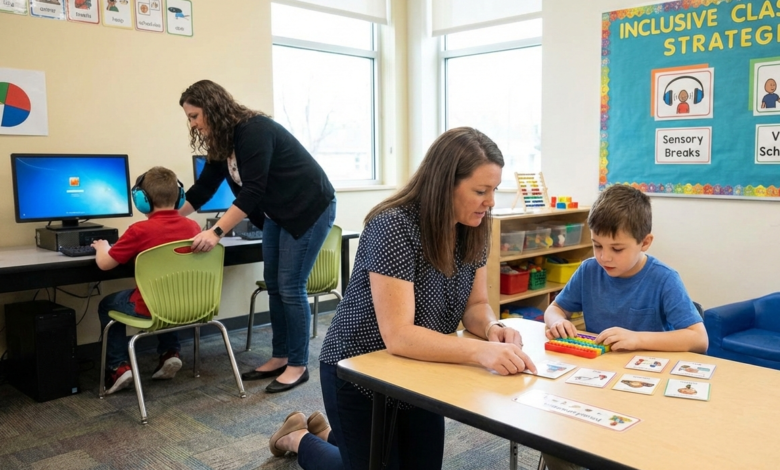
In addition to IEPs, modifying the classroom environment plays a vital role in aiding autistic students. This can include arranging seating to minimize distractions, providing quiet spaces for breaks, and creating visual schedules that outline the daily routine. Structure and predictability can significantly alleviate anxiety, enabling students to focus on learning tasks effectively.
Communication techniques are also fundamental in fostering understanding and connection. Educators should employ clear, concise language, frequently use visual aids, and encourage non-verbal communication methods, such as sign language or pictorial tools. These approaches can facilitate engagement and comprehension, allowing students to express themselves more freely.
Furthermore, creating a sensory-friendly environment is crucial. Many students with autism experience sensory sensitivities, and simple adjustments such as dimming lights or providing noise-canceling headphones can make a substantial difference. Implementing a sensory diet—an individualized plan of activities designed to meet a student’s sensory needs—can also promote self-regulation and readiness to learn.
Finally, collaboration with specialists, such as occupational therapists and speech-language pathologists, can enhance support for students with autism. These professionals can provide targeted strategies and interventions that complement the educator’s efforts, ensuring a holistic approach to learning and development for each student.
Fostering an Inclusive Classroom Environment
Creating a welcoming and inclusive atmosphere for students with autism is vital for their academic and social development. To achieve this, it is essential to foster understanding and empathy among peers. Educators can facilitate activities that encourage students to learn about autism and the unique experiences of their classmates. Through workshops, discussions, and interactive sessions, students can gain insight into various perspectives, ultimately nurturing a supportive environment.
Implementing peer buddy systems is another effective strategy for promoting inclusivity. By pairing students with autism with compassionate peers, schools can encourage meaningful relationships that allow for enhanced social interaction. These buddy systems should be structured to enable both sets of students to learn from one another, thus enriching the educational experience for everyone involved. It is crucial that the selected peers are empathetic and trained in understanding the specific needs of their classmates with autism.
Moreover, fostering collaborative learning experiences can greatly benefit all students in the classroom. Group projects or cooperative tasks that require teamwork can help break down barriers and facilitate communication between students with autism and their peers. A well-structured collaborative environment encourages participation and ensures that all voices are heard, leading to a greater sense of belonging for students with autism.
Educating fellow students about autism is equally important in reducing stigma and promoting acceptance. Informative presentations, guest speakers, or age-appropriate educational materials can be integrated into the curriculum to raise awareness. When students understand autism as part of the diversity present in their classrooms, it cultivates respect and empathy, which are critical components of an inclusive educational setting.