Conjunctions are like the glue that holds our sentences together. They link words, phrases, or clauses to create meaningful connections and enhance the flow of our language. In this lesson, we’ll delve into different types of conjunctions, understand their functions, and explore examples to solidify our understanding.
- Coordinating Conjunctions:
- Explanation: Coordinating conjunctions join words, phrases, or independent clauses of equal grammatical importance.
- Examples:
- And: I like tea and coffee.
- But: He is tired, but he keeps working.
- Or: Would you like tea or coffee?
- Nor: She neither smiled nor waved.
- Yet: He is small yet strong.
- So: It’s late, so we should leave.
- Subordinating Conjunctions:
- Explanation: Subordinating conjunctions connect independent clauses to dependent clauses, indicating the relationship between them.
- Examples:
- Because: I am hungry because I skipped lunch.
- Although: Although it rained, we went for a walk.
- If: If it snows, we’ll build a snowman.
- While: I read while I wait.
- Since: Since it’s raining, we’ll stay indoors.
- Until: I’ll wait until you finish.
- Correlative Conjunctions:
- Explanation: Correlative conjunctions work in pairs to join words or phrases with similar grammatical structures.
- Examples:
- Either…or: You can either eat now or later.
- Neither…nor: Neither the dog nor the cat wants to go outside.
- Both…and: She is both smart and kind.
- Not only…but also: He is not only tall but also athletic.
- Whether…or: I don’t know whether to laugh or cry.
- As…as: She is as brave as a lion.
- Conjunctive Adverbs:
- Explanation: Conjunctive adverbs connect independent clauses and show relationships such as cause and effect, contrast, or sequence.
- Examples:
- However: I wanted to go; however, I had to stay.
- Therefore: It’s raining; therefore, we should take an umbrella.
- Meanwhile: She studied; meanwhile, her friends played.
- Consequently: He missed the bus; consequently, he was late.
- Nevertheless: It’s expensive; nevertheless, I’ll buy it.
Conclusion: Conjunctions are versatile tools in the English language, enabling us to create complex and varied sentences. By understanding the different types of conjunctions and their functions, we can effectively convey our thoughts, connect ideas, and improve the coherence of our writing. Practice using conjunctions in your own writing to master their usage and enhance your communication skills.
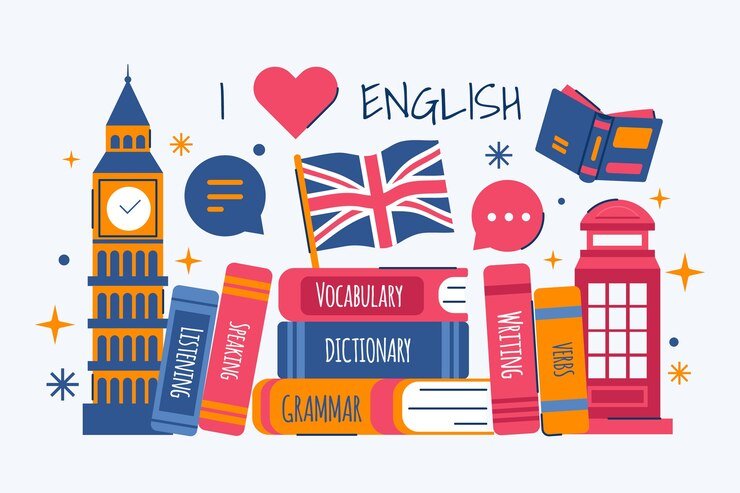
*Image by drobotdean on Freepik